OK, I had an inner debate whether or not to post about this. I don't like to point out when other folks in my profession screw up. However, I was hired, basically to clean up someone else's mess. SO I thought I would talk about it in generic terms.
If you cannot be trusted that your word is your word in the process service business, you have already lost in the process service business. See, some young, inexperienced process servers think that you have to show that you serve the papers above all else to have credibility. This isn't really the case.
First of all, there is this thing in Texas called alternative service. If I am trying to serve you, and I do not catch you at home (but I can show it is your home), I do not have to serve you in person. If I make (in most Texas Counties) 3 attempts to serve you at home (or work) and I do not catch you there - whether or not it is because you don't answer the door, or you are just not there - I can write an affidavit stating my attempts and how I know you live (or work) there and a judge more often than not will allow alternative service. That usually means I can either leave the papers with anyone over 16 at the residence, or I can "post" them to the front door (or gate if I cannot access the door). Posting simply means attaching it (usually bu tape) to the front door.
Here is the key. The affidavit. If a process server ever lies on an affidavit - they may as well quit the business. Why? Several reasons. First, you have committed a felony (perjury). Second, if you lied once - every single service you have done can be contested. Every single service you do in the future can be contested. You have no credibility - none. See every return a process server files is either a notarized statement, or a statement made "under penalty of perjury" when filed wit the court. Once you have been found out to have lied - there is no reason to believe you.
Do servers make mistakes on returns? Sure they do - a mistake is not a lie. It can be corrected with an amended return. If you make enough returns, you will need to make amended returns. If you lie on an affidavit or return - You are done. I mean for good. Forever. There is no "grace period."
To circle back to what I said earlier, about pressure to show that you "serve" the papers, this is the only motivation I can think of for a process server to lie on a return or affidavit. Why lie.
As a process server, I am a professional disinterested third party. My job is to to do the best I can to serve the documents, but if I cannot, there usually are remedies in the system. It is no skin off of my nose if I do not get someone served, if I have put forth due diligence to get the papers to them.
So, there is someone who knows the specifics of a process server who lied in an affidavit. That person is now obligated under Texas rules to report this to the JBCC (the folks who regulate process servers). I hope that this is done.

This is the Blog of Barry Dunn Advisory Group LLC. You will find information about our company and Private Investigation in general.
Showing posts with label tips. Show all posts
Showing posts with label tips. Show all posts

Understanding How to Assess Intelligence
OK, I know when people see "intelligence" they think about spy agencies and whatnot. Well, most of what PIs deal with is intelligence. Sometimes a PI will forget about assessing the intelligence "because the information is so good." What I mean by that is, we learn something from a source that really could blow the case wide open. We need to tread lightly, if we do not assess the intelligence.
OK, I have already over used "assess" so I will explain what I mean. When we gather information, we need to weigh the quality of information we receive. We really need to explain this if and when we pass this information on in our reports. One line you should never see in a PIs report is "I learned that..." or "I discovered that..." at least not with an explanation of how it was learned/discovered.
You see, sometimes how you get the information is nearly as important as the information itself. I am not saying you need to reveal your sources directly. Example: Let's say you run a report from one of the data companies. The report shows that your person of interest resides at 123 Austin Street, Houston, TX. Look at the report closely. Does it show a driver's license using that address? Can you find a second source through public records or even a Google search? You should never just say "Well, Acme information service says he lives there."
Here is an example of what I mean. I had to farm out a paper to be served out of state. I gave them the information that I had. I also explained where I received the information. This included using "a friend of a friend on Facebook." It also included jail booking records and what agency it was from.
If I just said "I have information he is at that address." without passing on how I got the information, the people receiving it have no idea how to assess the information.
This happens all the time. What happens? Someone telling me information without giving me an idea where it came from. How do I know it happens? I get something from someone almost every day this way. What happens when I cannot confirm the information or deny it right away? I have to pick up the phone or email and ask how did they get the information.
Save a step - pass on how you got the information. You may have to say, "I have an informant I have used in the past that has been very reliable." That is OK. Or, "I learned it from the Ex." Exes often keep closer tabs on the whereabouts of the ex than they did when they were together - go figure.
Weigh your intelligence, it will help you know how much time and effort to put in on what you are doing, Sometimes you only have a sliver of information, and that is fine. Just know how to use your resources wisely.
Stay safe!
OK, I have already over used "assess" so I will explain what I mean. When we gather information, we need to weigh the quality of information we receive. We really need to explain this if and when we pass this information on in our reports. One line you should never see in a PIs report is "I learned that..." or "I discovered that..." at least not with an explanation of how it was learned/discovered.
You see, sometimes how you get the information is nearly as important as the information itself. I am not saying you need to reveal your sources directly. Example: Let's say you run a report from one of the data companies. The report shows that your person of interest resides at 123 Austin Street, Houston, TX. Look at the report closely. Does it show a driver's license using that address? Can you find a second source through public records or even a Google search? You should never just say "Well, Acme information service says he lives there."
Here is an example of what I mean. I had to farm out a paper to be served out of state. I gave them the information that I had. I also explained where I received the information. This included using "a friend of a friend on Facebook." It also included jail booking records and what agency it was from.
If I just said "I have information he is at that address." without passing on how I got the information, the people receiving it have no idea how to assess the information.
This happens all the time. What happens? Someone telling me information without giving me an idea where it came from. How do I know it happens? I get something from someone almost every day this way. What happens when I cannot confirm the information or deny it right away? I have to pick up the phone or email and ask how did they get the information.
Save a step - pass on how you got the information. You may have to say, "I have an informant I have used in the past that has been very reliable." That is OK. Or, "I learned it from the Ex." Exes often keep closer tabs on the whereabouts of the ex than they did when they were together - go figure.
Weigh your intelligence, it will help you know how much time and effort to put in on what you are doing, Sometimes you only have a sliver of information, and that is fine. Just know how to use your resources wisely.
Stay safe!
NSA Has Been Tapping Into Skype
We should have known. You should have known. Every time Microsoft takes over an operation – security is compromised. This happened when Skype was taken over by the Software giant. Before Skype was nearly impossible to “tap” because it was a peer to peer service and was encrypted. Once Microsoft took over, they decided that Skype needed to increase Skype’s reliance on the Microsoft-owned “supernodes.”
Then comes May… ARS technical – a security website (http://arstechnica.com) revealed good reason to fear that the once “untappable” system became vulnerable. Their research found evidence that Microsoft has access to the unencrypted contents of Skype chats. You can see that information here: http://arstechnica.com/security/2013/05/think-your-skype-messages-get-end-to-end-encryption-think-again/
- in a nutshell – they sent Skype messages containing specific links. Those links were “clicked on” by machines that had IP addresses belonging to Microsoft.
According to the Guardian, Microsoft helped enable the NSA to intercept Skype conversations. From their article (http://www.guardian.co.uk/world/2013/jul/11/microsoft-nsa-collaboration-user-data/print) they also state that:
Whatever you do – stay safe!
Then comes May… ARS technical – a security website (http://arstechnica.com) revealed good reason to fear that the once “untappable” system became vulnerable. Their research found evidence that Microsoft has access to the unencrypted contents of Skype chats. You can see that information here: http://arstechnica.com/security/2013/05/think-your-skype-messages-get-end-to-end-encryption-think-again/
- in a nutshell – they sent Skype messages containing specific links. Those links were “clicked on” by machines that had IP addresses belonging to Microsoft.
According to the Guardian, Microsoft helped enable the NSA to intercept Skype conversations. From their article (http://www.guardian.co.uk/world/2013/jul/11/microsoft-nsa-collaboration-user-data/print) they also state that:
• Microsoft helped the NSA to circumvent its encryption to address concerns that the agency would be unable to intercept web chats on the new Outlook.com portal;It does not take an intelligence expert to connect the dots. I firmly believe the sole purpose of Microsoft taking over Skype was for the intelligence community to be able to monitor the conversations. Do I have absolute proof? No. Does it all make sense looking at the situation now? Yes.
• The agency already had pre-encryption stage access to email on Outlook.com, including Hotmail;
• The company worked with the FBI this year to allow the NSA easier access via Prism to its cloud storage service SkyDrive, which now has more than 250 million users worldwide;
• In July last year, nine months after Microsoft bought Skype, the NSA boasted that a new capability had tripled the amount of Skype video calls being collected through Prism;
Whatever you do – stay safe!
Making Sure Your Photos and Video Can Be Used as Evidence
It is really not all that difficult to get photographic evidence or video evidence introduced into a case.
There is an age- old "7-Prong Test" for this type of evidence to be admitted:
1) It must be proved that the camera was capable of taking photos/video. In other words Was the camera was in good operating condition without malfunctions?
2) The person taking the video/photos must be shown to be competent in the use and operation of the camera.
3) The authenticity and correctness of the recording must be documented. You must be able to document that tampering with the photos/video has not occurred.
4) You also must be able to show that the video or photographs have not had any additions, deletions or changes made. Note: You must be able to testify that the video is a true and complete recording, free of editing or tampering of any kind. If a video is edited (like many need to be to have a time-stamp), the original unedited copy must be available for review by the court. I also often have to convert the files to another format, as the court may not be able to view the original format.
5) The court must be shown the manner of presentation.
6) The recordings must show proper identification of the subjects depicted in the video or photographs. Note: The investigator must have proper facial views of the subject documented so that the identity of the subjects can be assessed. Either that or other distinctive markings, or tattoos must be clearly visable.
7) You need to be able to show that the actions was elicited voluntarily without inducement. You cannot cause a situation that would create circumstances that would make the subject act differently than they might without the circumstances presented to them. For example: you cannot let the air out of a tire to cause the subject to have to change the tire. This comes down to entrapment.
If you can meet the 7-prong test, you can get the evidence admitted. Questions about video or photos on an SD card and whether they are on the orginal SD card are not really relevant. SD cards are merely temporary storage devices for the evidence themselves.
Whatever you do - stay safe!
There is an age- old "7-Prong Test" for this type of evidence to be admitted:
1) It must be proved that the camera was capable of taking photos/video. In other words Was the camera was in good operating condition without malfunctions?
2) The person taking the video/photos must be shown to be competent in the use and operation of the camera.
3) The authenticity and correctness of the recording must be documented. You must be able to document that tampering with the photos/video has not occurred.
4) You also must be able to show that the video or photographs have not had any additions, deletions or changes made. Note: You must be able to testify that the video is a true and complete recording, free of editing or tampering of any kind. If a video is edited (like many need to be to have a time-stamp), the original unedited copy must be available for review by the court. I also often have to convert the files to another format, as the court may not be able to view the original format.
5) The court must be shown the manner of presentation.
6) The recordings must show proper identification of the subjects depicted in the video or photographs. Note: The investigator must have proper facial views of the subject documented so that the identity of the subjects can be assessed. Either that or other distinctive markings, or tattoos must be clearly visable.
7) You need to be able to show that the actions was elicited voluntarily without inducement. You cannot cause a situation that would create circumstances that would make the subject act differently than they might without the circumstances presented to them. For example: you cannot let the air out of a tire to cause the subject to have to change the tire. This comes down to entrapment.
If you can meet the 7-prong test, you can get the evidence admitted. Questions about video or photos on an SD card and whether they are on the orginal SD card are not really relevant. SD cards are merely temporary storage devices for the evidence themselves.
Whatever you do - stay safe!
Get Yourself Caught
If you want to get yourself caught doing something you shouldn't - just post it on Facebook (or Twitter or even that dying MySpace).
Some knucklehead ended up in bigtime trouble with child support, because he posted this picture on Facebook (credit photo to Facebook)

You can read the story here: ABC News Story
Obviously he isn't the smartest of fellows. He probably even posted this believing it would help him in some way!:
 :
:
Whatever you do - stay safe!
Some knucklehead ended up in bigtime trouble with child support, because he posted this picture on Facebook (credit photo to Facebook)
You can read the story here: ABC News Story
Obviously he isn't the smartest of fellows. He probably even posted this believing it would help him in some way!:
Whatever you do - stay safe!
Happy New Year
Well, 2012 went and 2013 has arrived. I have mixed feelings about business, as it was doing really well, but the holidays gave me a really big slow down. Couple that with a few incidents that took place at the end of the year, and now I feel the pressure.
All is good though, as it seems I can do OK in this business, and I will re-double my marketing efforts for the new year. Many of them are very simple, but they seem to work.
This year I will start of giving everyone a free tip. They often ask me how to protect their privacy on Facebook. That is really easy - don't put anything private on Facebook! (Seriously, if you don't get this, maybe you just need to delete your Facebook account)
All is good though, as it seems I can do OK in this business, and I will re-double my marketing efforts for the new year. Many of them are very simple, but they seem to work.
This year I will start of giving everyone a free tip. They often ask me how to protect their privacy on Facebook. That is really easy - don't put anything private on Facebook! (Seriously, if you don't get this, maybe you just need to delete your Facebook account)
Starting Out as a PI - How to Survive
I recently started helping some out in developing a PI's survival guide for new and upstart PIs. Some old timers will frown upon my share "trade secrets" but I am of the belief that there is a lot of work out there for private investigators that work hard and continually are trying to improve their trade craft.
The following are a few tid-bits of information I shared:
The first and foremost thing I learned to do is incorporate. It wasn't that much to file (I don't remember the cost, but it wasn't high) as an LLC and you really don't need a lawyer to do so - pretty simple instructions from the Secretary of State. You need this protection. I learned this the hard way from my father's business when he was a Hertz agent. Someone who got in an accident and it was their fault sued my father. They didn't win the case, but the cost of defending himself took pretty much all he had saved up.
The next thing I recommend (though some PIs do not want to do this) is get certified as a process server and do this before or as they are waiting to become a licensed PI. There are a lot of similarities and it can get the foot in the door with attorneys. The process of becoming a licensed PI in Texas can take quite a while. Through no fault of my own, it took me more than 6 months from when I first applied and I passed the managers test on the first try. Maybe I will tell that whole story sometime later.
One key issue that hampered me was I did not know what equipment I needed. Remember, I was starting out as a private investigator and had not done investigations privately, only as a police officer. I bought a lot more stuff than I needed, and think more than anyone would NEED, but all the cool stuff made me buy too much.
So what equipment do I recommend? The piece of equipment I use the most, and works for me in all sorts of circumstances is a Sony digital recorder I bought at Wal-Mart. I can put the thing on record and even drop it in a cargo pocket in some pants and it records conversations perfectly. I paid all of $69 plus tax. I did add a 2 Gig card. The model is ICD-PX312. Did I say I use this ALL the time. I replaced the batteries after about 8 months, even though the battery indicator showed they were still OK.
But Guess what? You can buy it even cheaper today. Here is an example:

The following are a few tid-bits of information I shared:
The first and foremost thing I learned to do is incorporate. It wasn't that much to file (I don't remember the cost, but it wasn't high) as an LLC and you really don't need a lawyer to do so - pretty simple instructions from the Secretary of State. You need this protection. I learned this the hard way from my father's business when he was a Hertz agent. Someone who got in an accident and it was their fault sued my father. They didn't win the case, but the cost of defending himself took pretty much all he had saved up.
The next thing I recommend (though some PIs do not want to do this) is get certified as a process server and do this before or as they are waiting to become a licensed PI. There are a lot of similarities and it can get the foot in the door with attorneys. The process of becoming a licensed PI in Texas can take quite a while. Through no fault of my own, it took me more than 6 months from when I first applied and I passed the managers test on the first try. Maybe I will tell that whole story sometime later.
One key issue that hampered me was I did not know what equipment I needed. Remember, I was starting out as a private investigator and had not done investigations privately, only as a police officer. I bought a lot more stuff than I needed, and think more than anyone would NEED, but all the cool stuff made me buy too much.
So what equipment do I recommend? The piece of equipment I use the most, and works for me in all sorts of circumstances is a Sony digital recorder I bought at Wal-Mart. I can put the thing on record and even drop it in a cargo pocket in some pants and it records conversations perfectly. I paid all of $69 plus tax. I did add a 2 Gig card. The model is ICD-PX312. Did I say I use this ALL the time. I replaced the batteries after about 8 months, even though the battery indicator showed they were still OK.
But Guess what? You can buy it even cheaper today. Here is an example:
You can find one as cheap as $28 bucks now.
I have more on this, but I hate long posts - stay tuned and stay safe!
Time - Stamping Videos - One More Way
I forgot that I had one piece of equipment that I can "time stamp" videos with. I had bought this over a year ago. I normally do not use it, because to me, it is just too time consuming. However, it is the cheapest way out there to make time-stamped videos from HD camcorders. You just play the video in the Camcorder displaying the date and time when this device is connected between the camcorder and a computer.
You can record the file in an avi file that will have the time and date stamp. This is OK for short recordings, for longer ones it still works, but it only works in real time. So however long the recording is, that is how long it takes (plus set-up time) for you to make the recording.
Here is one such device from Amazon:
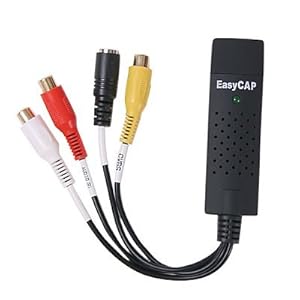 It is called Easycap.
I hope this works out for you as it has for me. And
Stay Safe!
You can record the file in an avi file that will have the time and date stamp. This is OK for short recordings, for longer ones it still works, but it only works in real time. So however long the recording is, that is how long it takes (plus set-up time) for you to make the recording.
Here is one such device from Amazon:
I hope this works out for you as it has for me. And
Stay Safe!
Investigations Basics - Part 6
A good memory
The third thing you need to have is a good memory. Now we all are not gifted with having a good memory. Frankly, mine is not all that good. So I learned to compensate. I record phone calls and interviews that are connected to the case. I also take notes, just in case. I am constantly using the reminders and calendar in my phone to keep me on schedule. Use technology to your advantage and realize that being able to repeat or report on the information you obtain is a key element in the investigation’s success.
I also maintain a database of all my cases and any of my work that has every individual I get information on and from. This can be very important, not only for your current case, but subsequent cases. It can also prevent you from conflict of interest later on down the road.
Take pictures and video, and don’t be shy about it. Explain to others that you need to document who you have spoken with in the interview. There are times where subtlety is needed, so use a spy camera for those occasions. You don't have the mortgage the farm. You can buy a key-chain camera online at eBay for around 12 dollars that will work just fine. Have a good memory, but document everything you can with some type of recording.
Sometimes having a good memory means having a big enough memory card.
Stay safe!
Investigator Basics - Part 5
As in many walks of life, you must be able to communicate
effectively. You need to be able to do
this on the phone, in email, in written reports – almost in any form of
communication you can think of. Your
ability to communicate on the phone will likely be what gets you more cases or
not.
It is not just about being able to express yourself
either. You must be a good listener in
order to effectively communicate. In order to be good at interviewing people,
you must be able to communicate effectively with the person to whom you are
questioning. If you don’t have good listening skills, it will impair your real
effectiveness as an interviewer.
As a consequence, you will find it very difficult to be a
successful criminal defense or corporate investigator if you cannot conduct
good interviews. There is nothing more offensive or annoying than someone
speaking down to someone or using speech or language that is difficult to
comprehend. You must be able to speak to anyone from a young person with a
limited education to a professional person, in language that is appropriate and
clear. Always use the most concise word
– the word that has the clearest meaning.
Make sure that when you ask a question, it is not too
complicated. It is better to use several
simple questions instead of a long complicated one. This applies to information that you are
giving too. It is always better to be
short and concise instead of wordy and complicated.
Try to keep your ideas and questions about certain issues
together. For instance, when covering
the “Where” question: Keep all questions concerning the description of the
location together. Do the same thing
when asking about the description of a person.
Keep those types of questions together. It is easier for the other
person to keep their train of thought. It
is OK to go back later and ask a question on any topic for the purpose of
finding out if they are telling the truth.
Avoid wording your questions so that you are asking about
what a person does not know. Do not ask
“You didn’t see the license plate did you?” unless it is a follow up question
to something they may have said about the license plate. Instead ask them to describe what they
remember about the vehicle. You can help
the person you are interviewing describe the vehicle by asking questions about
the size, color, type, and so on.
Here are some tips to communicating effectively:
- · Listen, then in your own words repeat what you understand the person is telling you
- · If you are giving any kind of information, ask if the other person understands the directions or information
- · Project positive attitudes towards others and try to foster good human relations
- · Be empathic and express concern for others
- · Manage conversations and effectively draw out information
- · Pay great attention to the other person’s non verbal cues
Whatever you do - Stay safe!
Investigator Basics - Part 4
So now we finally get to the part where I discuss the needed qualities of an
investigator:
The next few posts will be about attributes and special qualities that will
help you as an investigator achieve success.
Today's topic: The Ability to get others to work with you
The first quality I will focus on is the ability to get people to work or co-operate
with you. Why you ask? Well, first off, it is my blog, and secondly
– it is likely one of the most important skills you will need. It will help you with witnesses, clients,
suspects, professionals you need assistance from, and pretty much anyone else
you come across in your daily work.
You will make a living or go broke as an investigator with
your ability to collect information. If
you can communicate well, you have an upper hand on becoming a great
investigator. That communication can be
done in your interviews and in your writing of reports. Often, you will need to communicate
effectively to obtain information from all sorts of sources.
You will need to have the ability to interact effectively
with all types of people. It doesn’t
matter if they are day laborers or lawyers, you will need to find a way to
communicate effectively with them. If
you are having trouble relating to your clients, or suspects, people in the
clerk’s office who are the custodians of public records, and witnesses, you may
need to consider looking into another line of work. If you alienate witnesses, they probably will
not give you any information.
You have to be able to understand with whom you are
dealing. There are times a simple
question and answer gets you the desired information for your case. You need to know when to play nice and also
when to be more forceful. There are
other times when you just need to lie to get the information you need. I could have said it nicely that you need to
“play a role” or use subterfuge or pretext, but we all know what is really going on.
When you are working on an investigation, you will make many
contacts. These will be people that are
connected to your case in numerous ways whether they are clients, witnesses, or
suspects. Sometimes you will simply be dealing with members of the public who
can provide information.
How are you going to get the facts and information you need
if you cannot obtain co-operation from as many people as possible? Remember that you are trying to bring your
investigation to a successful conclusion. You need to have patience, good
manners, diplomacy, and understanding. A suspect or witness who has been
brow-beaten, scared, or annoyed by an impatient investigator has no value to you and will not add to the
investigation.
Here are a few tips:
·
Be genuinely interested in others and make sure
they know this
·
Be able to adapt to different personalities and
circumstances
·
Communicate effectively with others
·
Be believable – even when you bluff
·
Motivate other people when needed
·
Understand the emotional strengths and
weaknesses of others
·
Be sure to control your own emotions
·
Create friends rather than enemies – make sure
people are happy to see you coming
Whatever you do - stay safe!
Investigator Basics - Part 3
Now is the time that I will talk about ethics and
honesty. I always keep my clients up to
date on where the investigation is. I
also tell them about the cost effectiveness of this to do in the investigation. I do not give play-by-play or real time
updates on surveillance cases of any type.
Doing so would just be asking for trouble. I give a thorough report the following day.
This is for obvious reasons that the client may want to confront or catch the
subject of the investigation “red handed.”
Remember when you are interviewing people, if their lips are
moving they are lying. OK, that is an
exaggeration, but I have often found that people tend to tell lies, even when
they don’t need to do so. Do not get
angry or frustrated by this, just be aware of it. Also, do not decide how much information is
enough information before you start the investigation. Let the information and evidence speak for
itself. What may seem to be the opposite
of this is – find out what the client is expecting. Do they expect to see the subject “caught on
tape?” Do they expect the subject to confess?
Do they think there will be irrefutable evidence found out? These are things to be decided between the
client and investigator before you have started to conduct the investigation.
One of the things you should always be doing is developing
informants and sources of information before you need them. Never underestimate the power of being a
friendly patron and a good tipper at any place in the service industry. Stop in at bars and restaurants – you don’t
have to order expensive meals, just be friendly and leave good tips. It more than pays off in the long run. People
are often happy to give you information when they see you as a “good
customer.” Treat the people you deal
with in the public records places with dignity, respect, friendliness, and honesty. I try to keep the people I deal with in the
Clerks’ offices at the courthouse happy to see me coming. They have often done little things as a favor,
because I am a good customer.
Whatever you do - stay safe!
Investigator Basics - Part 2
So what makes you an investigator?
Remember, the investigator works at the gathering and
analysis of information. The information
is in records, statements, and evidence.
Sometimes the evidence can be gathered without surveillance. Sometimes the records are the evidence. Sometimes the statements are the
evidence. Sometimes a person won’t
freely give you the statement directly, so surveillance or even an undercover
operation is needed to collect what you need.
Investigators are professional researchers and analysts that
sometimes have to employ all of the following: observation, enquiry,
examination, experimentation, and analysis.
It is not always easy to obtain the evidence and information you need to
“solve” your case. The problem for the
private investigator, is that (s)he does not have the privileges often afforded
to law enforcement, and does not have the authority and resources of the state
or federal government behind them. The
private investigator must adhere to ethical behavior and work within the
law. The private investigator does not
have any privileges or authority any private citizen does not possess. The investigator must depend upon his or her
own savvy, training, experience, connections, and good old fashioned hard work.
Sometimes asking a question once is not enough. Try to not be too annoying (unless that is
the desired effect) when repeating questions.
Rephrase the questions. Ask the
questions from different perspectives.
Also, never under estimate the “oh I almost forgot to ask…”or the “one
more thing” before concluding the interview.
When people think the interview is over, they tend to let their guard
down. The Columbo TV trick can work well
when done correctly. I am not a believer
in TV techniques, but they usually got put into a script for a reason.
I am sometimes simple minded. I like to have the “Who, What, When, Where,
Why and How” written at the top of the page of my notebook when I
interview. I tick mark the item covered,
so I know what else I need to ask.
Sometimes I will just ask that simple question: How? Or Why?
Do not be too quick to commit yourself to deciding the guilt
or innocence of anyone whom you may question. Of course, from the old school of
investigating “If their lips are moving, they are lying” is almost better to
adhere to than believing whatever someone may say. Remember to balance what they say against the
records and the evidence available.
Remember that in the field, your primary purpose is to
gather facts. Normally, analysis, evaluation, and judgment are to come later. However,
this does not mean you should be naïve about what is going on. Decide for yourself if “playing dumb” is the
best course of action. I usually tell
the person I am interviewing, that I have just been hired and I do not know the
details of the case. This is usually not
true, but it gives me the excuse to ask very specific questions or repeat
questions to clarify information.
I have rarely felt like I had gathered all the information
needed to decide the truth, unless I obtained a video showing the incident in
question. I do not know if there is any
way to determine that you have gathered all the information possible. I usually tell the client that there is more
than can be gathered, but the cost effectiveness begins to drop dramatically,
and I leave it up to them to decide if they want me to spend the time and money
to continue the investigation. This of
course depends on the seriousness and the type of case being investigated. You should always be asking yourself if there
is anything that you have overlooked that could make a difference in the
outcome of the investigation.
Stay with these principles, and you can work your way into becoming an accomplished investigator. Whatever you do, stay safe!
Investigator Basics
Note: this is the first part of a multi-part series on private investigations basics.
If you want to be able to gather information, you need to
develop some skills in the human interaction department. To a lot of people, these skills come
naturally. Whether it is because of how
they were raised, or because they have a personality that helps them interact
with others. The rest of us have needed
to learn some of these skills, to become professional investigators.
I cannot tell you all of the reasons that people like or
dislike others. Nor can I tell you why
people trust or fear other people (in each case). Sometimes it is even difficult to understand
why people are attracted to or repelled by others. There are many college courses and books on
these subjects, but it usually boils down to past experiences, yours and theirs.
If you want to become an effective investigator, you must be
aware that there are many things in your whole basic make-up that can make an
impression upon others – be it good or bad.
This can come down to your choice of shoes, the type of deodorant or
cologne/perfume you use, your facial expressions, the kind of body language you
display, and of course your voice tone and phrasing. We cannot fail to mention your sex, race, and your upbringing. These all factor into how people see you.
The basics of investigation pretty much is gathering and analyzing information. The information you most often get is from
others’ statements. Of course, there is
the obvious evidence (like photos and video) but usually most of the evidence you gather will be the
statements made by people themselves. No
case can be “solved”, assets recovered, or missing people be located without
the investigator successfully gathering information. There is no one skill that will make you a
good investigator, you need to develop many skills, know your strengths and
weaknesses, and be aware of how you have been fooled in the past.
How do You Record Your Interviews?
Investigators almost always try to record the interviews they conduct. The main reason is for the purpose of accuracy when they have to report their findings. There are instances when you interview a potential witness, and they change their story in court. It is awfully nice to have a recorded interview where they state something different, especially if you need to discredit the witness or what they "now" say damages a case.
Every time I conduct an interview, I try to get it recorded. I have tried out several high-end recorders, only to find out the are "too good." Too many times when I have used the high end products, they are too sensitive and pick up way too much background noise. When I say recorders - I am speaking of digital recorders. I do not use tape any longer - it is just logistically too impractical. The 4th recorder I decided to try out was basically out of need. I had sent back another expensive model, and I needed one as a stop-gap measure. I bought a $59 model from Wal~Mart.
The recorder I got was a Sony ICD-PX312 digital recorder. It has a removable micro-SD card (which was one of the few requirements I have). It can record in several formats, and has several quality settings. I stated off using everything in the middle range. It it easy to set up and easy to use. I can turn the recorder on and lock the power button so it continually records conversations. I put the recorder in my pocket and conduct the interview. It doesn't matter if it is a shirt or pants pocket - it records the conversation really well.
I would have to give this recorder a 5 out of 5 rating if I had a system. It is easy to use, easy to set up and always gives me a great recording. This equipment is standard issue for everyone working for me.
If you use something that works really well, I would like to hear from you.
When Hiring a PI - What Do You Expect?
 One of the things that customers seldom understand is that PI's cannot do everything they want. OK, maybe they CAN do it, but they shouldn't do it.
If you are considering hiring a private investigator, ask yourself "What do I want out of this".
One of the things that customers seldom understand is that PI's cannot do everything they want. OK, maybe they CAN do it, but they shouldn't do it.
If you are considering hiring a private investigator, ask yourself "What do I want out of this".You need to know what you expect. A good private detective will explain to potential clients what they can and cannot do in a case. The largest complaints against PIs are not about doing inappropriate things, but about not fulfilling expectations.
The accomplished PI will ask enough questions to know what the client wants and expects, and then explain what the PI can and cannot do. Most people are reasonable. Even emotionally charged clients who have been cheated. If the private investigator takes the time to ask enough questions, and then explain what they can legally do, the clients usually understand what can be accomplished. Often clients expect to get graphic photos or videos of a cheating spouse. Unless the cheating is going on in a parking garage, that is very unlikely.
What can be documented is arrival at the same place and time possible on multiple occasions of two people who have no other reason to be together other than an illicit affair. Most cases like this are circumstantial. Rarely is there photo or video evidence of the dirty act. However, when the cheater is presented with evidence, they often cop to the cheating. I hope this helps -
Whatever you do, Stay Safe!
Three Keys to Success in Investigations
I have had people ask me how can they become a successful investigator? I sat down the other day and came up with these three key points. If you really want to succeed as an investigator, you need to continually learn new ideas and methods, but not forget about the basics. With all of the electronic shortcuts, some investigators forget to actually investigate things, which is a shame. The following are the three key points I have come up with:
1. One of the most important things I know for anyone to have in their work is a passion to do well in their job. This passion may be that you just really love what you do. I for one am one of those people that really love what I am doing right now. I am a people person, and I am constantly meeting people all the time and I love the interaction.
I also love studying people and their behavior. I know of no other job that lets me do this – including being a psychologist. They almost never get to study people when they are totally unaware that they are being observed. If you are a people person, loving the investigations business and having a passion for your work can come easy.
2. Another key element to success in investigation, is perseverance. Now, I know that you will not always be compensated to persevere, so we cannot always check out every single lead to the end. But you need to have the never-give-up attitude. When your clients see this attitude in you – you give them the confidence that you will succeed.
This does not mean you will always catch a cheater cheating. It also does not mean that you will catch the fraudulent insurance or disability claimant. Sometimes they are not cheating. Sometimes the claimant is really disabled. You cannot make them actually cheat or commit fraud. Also, sometimes they can just avoid being caught for a period more than your client can afford to pay you.
3. Honest self criticism is necessary for you to continually improve as an investigator. For the inexperienced investigator, I suggest finding an experienced friend who will do this with you. Do not get offended if they find something you have missed or have done wrong. Be open to suggestions, even from people who are not “experts” as new ideas should always at least be considered.
What I have done when doing self criticism, is that when I notice I did something wrong, or I missed something, I make a note of it, both in the file, and in a notebook I use for generic notes for myself. In a recent case, I forgot something as basic as to confirm the identity of someone I was interviewing. I feel silly for doing it, but I did not even realize I did it until I wrote the report of the investigation. You can bet that is not going to happen again. When I make mistakes in an investigation, I do not charge the client to correct the issue, because that one is on me.
If you do these three things on a consistent basis, you will have good investigations that get better as time goes on. Always study, learn, and especially learn from your mistakes. Becoming not just a good, but an exemplary investigator is goal I have, and you can attain that goal yourself with a little self discipline.
Cell Phone Recon - a Review
I decided to try out Cell Phone Recon. I installed it on my own phone to see how it performs and what all it really does. Here is what I can do. I can see what calls came into the phone, calls made from the phone, text messages to and from the phone. Emails to and from the phone (though some of these have not been tracked well). I also can track where I have been (via the cell phone) by GPS. Also you can switch phones when you want - but you can only monitor one phone at a time.
The program has a way to back up all of this information. I initially tried it out so I could recommend (or not ) the product. I decided it works really well, and I am going to keep it on the phone for 2 reasons.
1. It is a great CYA tool for work. I can prove where I have been and calls I have made, etc.
2. It is a good security tool for the phone. If my phone gets lost/stolen - I can find it via cell phone recon. I really like that idea.
Over all cell phone recon works as advertised. It is a great tool for you to use in investigations (if used properly under the law) and a great security feature for your own phone.
I highly recommend this product. You can get it from Brickhouse Security
Whatever you do - stay safe!
The program has a way to back up all of this information. I initially tried it out so I could recommend (or not ) the product. I decided it works really well, and I am going to keep it on the phone for 2 reasons.
1. It is a great CYA tool for work. I can prove where I have been and calls I have made, etc.
2. It is a good security tool for the phone. If my phone gets lost/stolen - I can find it via cell phone recon. I really like that idea.
Over all cell phone recon works as advertised. It is a great tool for you to use in investigations (if used properly under the law) and a great security feature for your own phone.
I highly recommend this product. You can get it from Brickhouse Security
Whatever you do - stay safe!
Is It Time You Got Your Smart Phone?
Smart phones are really great tools. They are especially great for private investigators. I finally broke down and got an Android phone, and I have used it like crazy. You can take notes, keep track of your mileage, integrate photos with map locations, browse the web, and you can use skip trace services on the spot.
I use the maps and latitude feature on my phone all the time. I can track movements from surveillance and spot my exact location right away. I have a Tom Tom which I love, but this app helps me go back and follow up much easier.
If you do civil process service there is an app that is great for that too. You can get a good app from http://www.truthinservice.com for about $80. I contract with a company and do process service and they have their own app. It seems to work pretty well.
I also use Droid Scan a lot for copying documents. All you need to do is have decent lighting and use the phone's camera to capture the document. The program does a good job of automatically cropping the edges of the document. It works really well and you can upload scanned documents to Google docs for later use. The OCR feature is pretty good if you need to make reports using information out of the documents.
It takes some practice and time to get really good at all of these apps, but there are many free ones that can get you going and help you with your work. I went a route that many may or may not want to go - I did the straight talk thing with the $45/month unlimited talk, text, and data - so far I have been happy with the phone, features and service.
Whatever you do out there - be safe!
I use the maps and latitude feature on my phone all the time. I can track movements from surveillance and spot my exact location right away. I have a Tom Tom which I love, but this app helps me go back and follow up much easier.
If you do civil process service there is an app that is great for that too. You can get a good app from http://www.truthinservice.com for about $80. I contract with a company and do process service and they have their own app. It seems to work pretty well.
I also use Droid Scan a lot for copying documents. All you need to do is have decent lighting and use the phone's camera to capture the document. The program does a good job of automatically cropping the edges of the document. It works really well and you can upload scanned documents to Google docs for later use. The OCR feature is pretty good if you need to make reports using information out of the documents.
It takes some practice and time to get really good at all of these apps, but there are many free ones that can get you going and help you with your work. I went a route that many may or may not want to go - I did the straight talk thing with the $45/month unlimited talk, text, and data - so far I have been happy with the phone, features and service.
Whatever you do out there - be safe!
Tips for Choosing a PI
You should choose a Private Investigator who is local. Why? Because you need to be able to contact the investigator and talk to him or her about your case. Most PI's will give free consultation. It is a good idea to meet him or her face to face.
Does it matter if they have an Office or PO Box? Remember, just because a Private Investigator advertises an office address doesn’t mean the Private Investigator is competent or professional. There may be other reasons that they have office space leased or owned. Many Professional Investigators who work from home are highly qualified and prefer to use a PO Box for their correspondence.
How important is their investigation experience? Most investigators are quick to point out what experience and qualifications they have.Many former Police, Federal Agents, Military Investigators, and others go into the private investigations business. Some have a easier time adjusting to the PI business than others, as private eyes are simply citizens who are licensed and have some expertise in investigations. In Texas, at least, PI's are not given any special priviledges that a normal citzen doesn't have. In Texas, for an investigator to have their own company, they must be licensed, insured, and have a minimum of 3 years investigations experience.
Does the Private Investigations Agency have business liability insurance? In Texas to have a license, you must first be insured before you can get a license.
What if they sub-contract some work? Often a private investigator will sub-contract out some of the work. In Texas this is not a particul;alery big deal, as all investigators are required to inform the clients of subcaontractors and give them information like name and contact information and state investigations license number. Where vere you are as a client you should always be aware of what is happening concerning subcaontractors. You should always inform the PI if you agree or disagree with it. If there is an agency that does not do this - I would avoid them. Most of this will be spelled out in the contract.
Can I just do the investigation myself? Yes you can. However, if you do not have the time and/or expertise, you may not be able to get the information you want. If you try to investigate yourself and mess things up, it may be much more difficult, if not impossible fot the investigator to do the job.
Remember, you are the client - it means you need to stay on top of the situation. Let the investigator do his or her job, but stay in touch and make sure they are working for you. Like dealing with most "contractors" using common sense is the first thing. Make sure you use a real licensed insured investigator.
Whatever you do - Stay safe!
Does it matter if they have an Office or PO Box? Remember, just because a Private Investigator advertises an office address doesn’t mean the Private Investigator is competent or professional. There may be other reasons that they have office space leased or owned. Many Professional Investigators who work from home are highly qualified and prefer to use a PO Box for their correspondence.
How important is their investigation experience? Most investigators are quick to point out what experience and qualifications they have.Many former Police, Federal Agents, Military Investigators, and others go into the private investigations business. Some have a easier time adjusting to the PI business than others, as private eyes are simply citizens who are licensed and have some expertise in investigations. In Texas, at least, PI's are not given any special priviledges that a normal citzen doesn't have. In Texas, for an investigator to have their own company, they must be licensed, insured, and have a minimum of 3 years investigations experience.
Does the Private Investigations Agency have business liability insurance? In Texas to have a license, you must first be insured before you can get a license.
What if they sub-contract some work? Often a private investigator will sub-contract out some of the work. In Texas this is not a particul;alery big deal, as all investigators are required to inform the clients of subcaontractors and give them information like name and contact information and state investigations license number. Where vere you are as a client you should always be aware of what is happening concerning subcaontractors. You should always inform the PI if you agree or disagree with it. If there is an agency that does not do this - I would avoid them. Most of this will be spelled out in the contract.
Can I just do the investigation myself? Yes you can. However, if you do not have the time and/or expertise, you may not be able to get the information you want. If you try to investigate yourself and mess things up, it may be much more difficult, if not impossible fot the investigator to do the job.
Remember, you are the client - it means you need to stay on top of the situation. Let the investigator do his or her job, but stay in touch and make sure they are working for you. Like dealing with most "contractors" using common sense is the first thing. Make sure you use a real licensed insured investigator.
Whatever you do - Stay safe!
Subscribe to:
Posts (Atom)